https://t.me/the_page_media
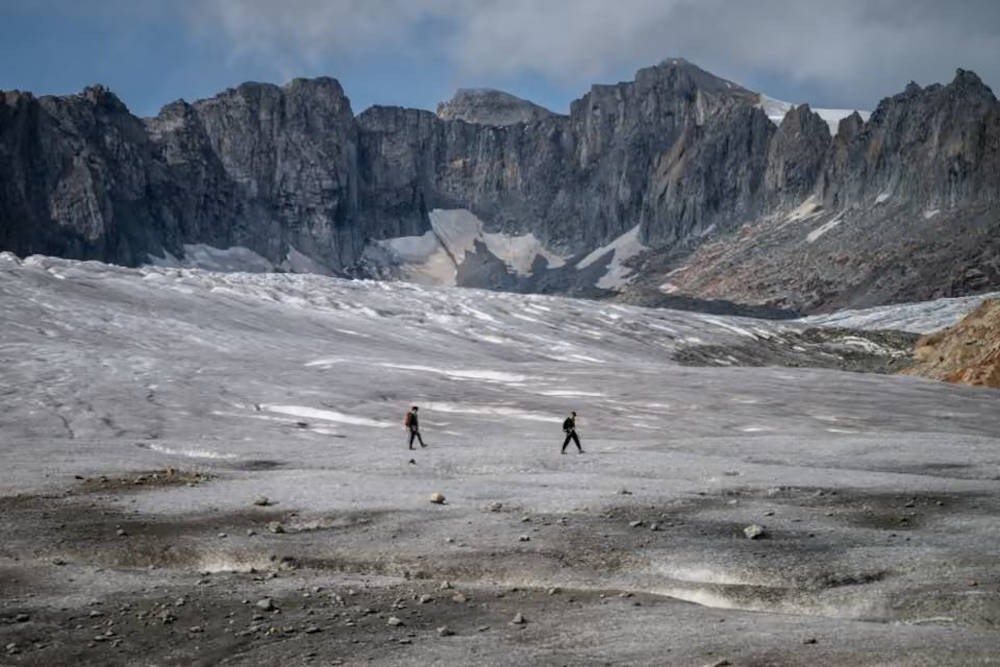
Swiss glaciers are melting at a catastrophic rate. In just the last five years, the country has lost nearly a fifth of its ice cover, permanently altering the familiar Alpine landscape. Key figures and facts: Record loss: In early autumn, it was revealed that Swiss glaciers shrank by 5.5% in 2026 alone. This marks the second-worst rate of melting on record (surpassed only by the record-breaking year of 2022). Total losses: The cumulative reduction in ice volume since 2021 has reached 19.4%. Scale of loss: The thickness of individual glaciers decreased by 2–4 meters over the year (with some areas losing up to 10 meters). There are extreme cases, too: for instance, the Plattalvafirn glacier has lost 99% of its surface area over the last two decades, transforming into a rocky wasteland. Why are Alpine glaciers melting? Climatic factors in recent years have been the primary drivers of this rapid glacial retreat: Winters with little snowfall, leaving glaciers without a sufficient protective layer of fresh snow. Abnormally hot and dry summers, which triggered massive rates of melting (ablation). Scientists emphasize that anthropogenic climate change and fossil fuel emissions are the causes of these changes. According to glaciologists, under current temperature conditions, Alpine glaciers have no chance of long-term survival, which threatens the water resources and ecosystems of all of Europe.
 TRX / USDT (TRC20)